
How to Select the Right Fire Pump
Selection Guide · Fire Protection · 1 June 2026 · 5 min read
Sample article — editorial to be reviewed
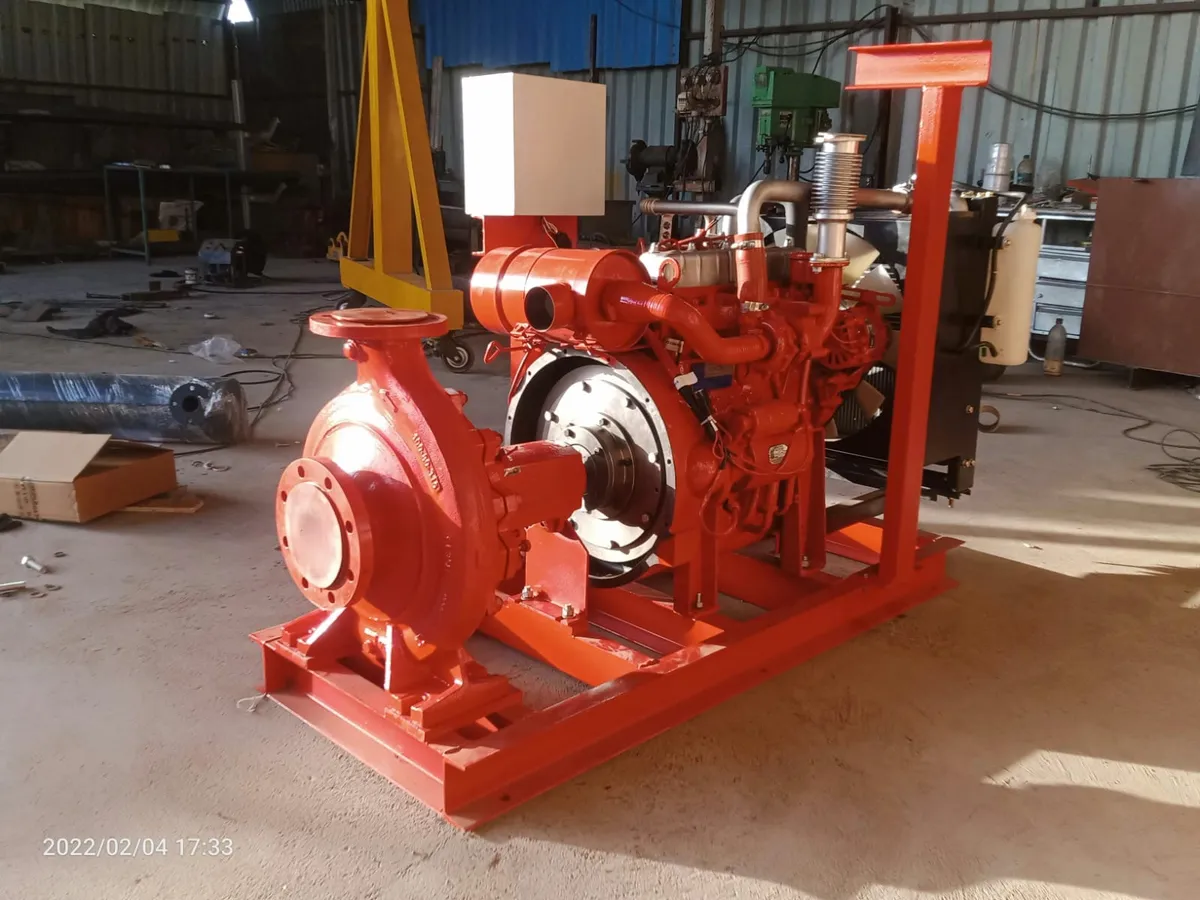
Specifying a fire pump is one of the few engineering decisions where under-sizing and over-sizing are both dangerous: too little and the system cannot hold pressure during a real event; too much and you invite destructive churn pressures and unnecessary cost. This practical checklist covers what our engineers verify on every fire pump enquiry.
Start from the demand, not the pump
The hydraulically most demanding scenario — hydrant flow, sprinkler density, hose streams and simultaneity — fixes your required flow and pressure. Work from the approved fire-protection design basis for the building, and let the duty point drive the selection rather than a catalogue page.
Flow, pressure and the duty point
- Rated flow — the pump must supply the design demand at rated pressure, and typically 150% of rated flow at not less than 65% of rated head.
- Churn condition — at zero flow the pressure must stay within what the piping, valves and sprinkler components can withstand.
- Suction conditions — verify the water source, tank capacity and suction arrangement; a fire pump that can cavitate is not a fire pump.
Main pump, jockey pump, or both?
The main fire pump delivers the design demand. The jockey pump exists only to hold the system pressurised against small leaks, so the main pump does not cycle. Sizing the jockey close to the main pump's capacity is a common and expensive mistake — it should be small enough that a real demand always forces the main pump to start.
Electric drive, diesel drive, or a combination
Electric motor driven pumps are simpler and cheaper to maintain, but they assume power is available during a fire. Diesel engine driven pumps keep pumping when the supply fails, at the cost of fuel systems, batteries and a stricter testing routine. Many installations pair an electric main pump with a diesel standby — the right split depends on the reliability of your power supply and the requirements of the approving authority.
Do not forget the pump room
Controllers, pressure sensing lines, test headers, valves and drainage decide whether the installed system can actually be tested and maintained. Insist on a commissioning protocol: flow test against the design duty, churn test, automatic start test and documentation handover.
Testing and maintenance
A fire pump proves itself only in the weekly/monthly test regime. Specify pumps for which spares and service support are locally available, and train the facility team on the test routine before handover.
Need help specifying a fire pump? Share your design flow, pressure and site conditions with our engineering team and we will respond with a recommendation, not just a price.
Related articles

Talk to an Engineer
Not Sure Which Product You Need?
Every application is different. Share your flow, head, application, fluid characteristics and project requirements with our engineering team. We will help you identify the right equipment for your application.